
Building a Sustainable Business That is Aligned with Your Beliefs
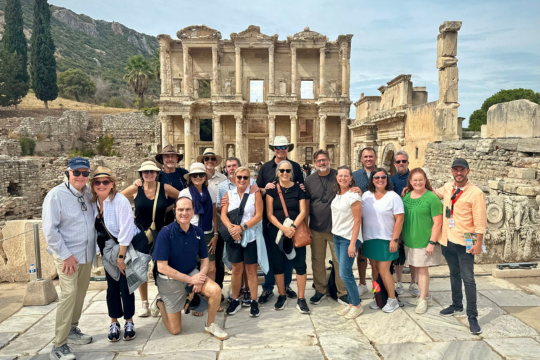
Luxury travel isn’t defined by a specific aesthetic or price point, it’s defined by the traveler. For some advisors, luxury means private villas and white-glove service. For Fred Baker and Stacey Baker, the husband and wife team behind Dogwood Travel Designs, it's ancient cities walked slowly, faith made tangible, and comfort that lets meaning land. Their story is so special because they gave themselves permission to let their own values shape their brand instead of the other way around.
Stacey’s path into travel began in a familiar way, planning Disney trips for her family. With a son on the autism spectrum, Disney became the place where their family could finally breathe, especially when it came to dietary needs and thoughtful accommodations. The predictability of it all created safety in a way that few destinations could. She started planning trips for herself, then for friends, then for clients. Over time, as requests came in for cruises and group celebrations, Stacey realized she was building something much bigger than a side hustle.
Fred’s background followed a different but complementary trajectory. A pastor with years of missionary experience leading international group trips, he brought a deep understanding of guiding people through meaningful travel experiences. Together, they developed a niche around luxury cruising and faith-based group journeys, particularly trips that help travelers connect biblical history with the places they visit. Their “Ancient Paths” journeys are designed to help clients thoughtfully and comfortably experience destinations like Ephesus, Athens, and Istanbul, all through a faith-centered lens.
It's a compelling niche that appeals to a large audience of luxury travelers, but claiming this niche required a significant mindset shift around money.
Fred grew up with a deep awareness of scarcity. In many faith communities, there's an unspoken equation between humility and having less, as if financial struggle signals spiritual integrity. For Fred, stepping into the luxury travel space felt like a contradiction of who he was.
I understand that tension more than people might expect. When I left Wall Street in 2001 to become a travel entrepreneur, I was surrounded by people who couldn't quite make sense of the decision. I'd spent years building credibility in a world that measured success in very specific, very visible ways. Choosing passion over prestige felt like a risk that many around me were certain I'd regret.
What I learned, slowly and sometimes painfully, is that the risk of ignoring your alignment is far greater than the risk of pursuing it.
Fred arrived at his own version of that truth. Scarcity is not a virtue, and serving clients who want luxury is stewardship, not indulgence. It's meeting people exactly where they are and honoring the client by delivering the experience they're asking for.
Making this mental shift from scarcity as identity to abundance as service changed the entire frame of their business. They never tried to separate who they are from what they sell.
So many of us were taught, either implicitly or explicitly, that professionalism requires us to set aside our full selves and present something more neutral, more palatable, more broadly acceptable. Some people probably think the safe option is to stick to what they see working for others, or what is currently trending.
The travel industry has enough advisors trying to fit into someone else's mold. What we need is people who understand their identity clearly enough to build from it who can say, with confidence, this is what I believe, this is who I serve, and this is how I do it.
If you love hearing stories like Stacey and Fred's, tune into The Travel Business Unpacked podcast! Each episode dives deep into the real stories, practical strategies, and transformational moments that turn travel dreams into thriving careers. Listen and subscribe on Spotify and Apple Podcasts, and check out the Baker's full episode here.
